

Most behavior problems in adult dogs and cats do not appear out of nowhere. The reactive lunging at every passing dog, the panic when a thunderstorm rolls in, the cat who disappears under the bed for three hours every time someone rings the doorbell- these patterns usually trace back to something that did or did not happen during the first few months of life. Puppies and kittens go through a critical socialization window, roughly 3 to 14 weeks of age, when their brains are wired to absorb new sights, sounds, surfaces, and social interactions. What they encounter during that window shapes how they respond to the world for years to come, and pets that miss out on positive early exposure are far more likely to develop fear, reactivity, separation anxiety, and noise aversion as adults.
Here is the encouraging part: most of this is preventable with the right start, and even pets who missed the early window can make real progress with patience and the right approach. At Advanced Veterinary Medical Center, our puppy packages and kitten packages are designed to support your pet’s physical and behavioral development from the start. Building confidence and emotional resilience is just as important as protecting against disease, and we love being part of that work. Request an appointment or reach out to our team to schedule an early wellness visit for your new puppy or kitten.
Why the Socialization Window Shapes Everything
Socialization research consistently shows that early experiences have a disproportionate and lasting influence on adult temperament. During the socialization window, a young animal’s brain is wired to learn what is normal and safe. The puppy who meets friendly bearded men in baseball caps as part of regular life will not bark at every bearded man in a baseball cap as an adult. The kitten who hears vacuum cleaners while being fed delicious treats grows into a cat who shrugs at vacuum cleaners. Positive experiences during this window become the template for how your pet interprets novelty for the rest of their life.
Reading canine body language and feline body language is part of guiding this process well. Knowing the difference between curious exploration and stress helps you support positive experiences rather than inadvertently allowing overwhelming ones.
| Confident body language | Anxious body language |
| Loose, wiggly body | Tucked tail, lowered body |
| Soft eyes, relaxed face | Wide eyes, whites showing |
| Ears in natural position | Ears flat or pinned back |
| Approaches with curiosity | Hides, retreats, or freezes |
| Wagging tail at mid-height | Stiff posture or trembling |
| Soft, open mouth | Tight closed mouth, lip licking, yawning out of context |
| Initiates contact and leaves easily | Avoids eye contact, won’t approach |
A pet showing the right column has had enough. Backing off, creating distance from the trigger, or ending the session is the right call.
What Good Socialization Actually Looks Like
Good socialization is controlled exposure paired with positive associations, not flooding a young pet with stimulation. There is a real temptation to take a new puppy everywhere all at once, but quality matters more than quantity here. A puppy who has had ten calm, positive encounters with friendly children develops differently than one who has been mobbed by twenty grabby toddlers at the park.
Common behavior issues in adult dogs, including leash reactivity, aggression toward strangers, and resource guarding, frequently trace back to gaps during this period rather than any individual event.
Effective socialization targets:
- People of different appearances, ages, and ways of moving (men with hats and beards, kids running and shouting, people with mobility aids, delivery workers in uniforms)
- Friendly, vaccinated dogs and cats
- Varied surfaces: carpet, tile, gravel, wet grass, metal grates, wood floors
- Sounds: traffic, appliances, fireworks recordings played at low volume, thunder, doorbells
- Handling: ears, paws, mouth, being picked up, being gently restrained
- Car rides that go somewhere fun, not only to the vet
- Veterinary-style handling at home with treats so the real visit is not the first time they’ve been touched in that matter
For kittens, home-based exposure matters even more than for puppies. Cats are wired to be cautious about novelty, and the foundation laid in those first weeks (regular handling, carrier introduction, sounds of a busy household, meeting different people) is what builds a cat who approaches the world with curiosity rather than fear.
Practical Socialization Strategies
Puppy Classes
Puppy classes that require vaccinations and prioritize positive experiences provide structured, supervised socialization during the critical window. The American Veterinary Society of Animal Behavior supports attending puppy classes even before the full vaccine series is complete, because the behavioral benefit of early positive group interaction outweighs the disease risk in controlled settings.
Please note: Dog parks, doggy day care with other adult dogs, city parks, and places where unknown dogs have been are not good places for socialization. Avoid socializing your puppy in places where you don’t know if a sick dog has been present. Parvovirus can live in the soil for up to a year- it’s not worth the risk. Carry them, put them in a cart or wagon, or choose places where floors have been cleaned or you are positive that only healthy dogs have been present, like private backyards.
A good puppy class is not just about teaching sit and down. It is about your puppy learning to be calm around other puppies, to take treats from new people, to walk on different surfaces, and to recover quickly from minor surprises. Our Puppy 101 resource supports families in understanding what to expect and how to guide early development. We’re happy to recommend local resources for puppy socialization and classes.
Carrier and Leash Training
Carrier training transforms veterinary visits from a stressful ordeal into a manageable routine. The classic mistake is keeping the carrier in the garage and pulling it out only on vet days, which trains your cat to associate it with stressful trips. Instead, leave the carrier open in a quiet corner, place familiar bedding inside, feed meals near or inside it, and toss in occasional treats. After a few weeks, most cats start treating the carrier as just another piece of furniture, and the next vet visit gets dramatically easier.
For puppies, loose-leash walking is best built early. Reward your puppy generously for walking near you and stopping when the leash goes tight. Walk around your living room or driveway, practicing the skills that they’ll need when they are able to walk in the real world. The habits you build in the first few months are the ones you live with for the next decade.
Exposure to Movement and Wheeled Objects
Many adult dogs develop fear responses to cyclists, skateboards, strollers, or scooters because they were never positively introduced to moving objects during puppyhood. The Bay Area is full of bikes, skateboards, scooters, and joggers, and a dog who has not learned that wheeled things are normal is a dog who will lunge or bark at them for years. Calm, rewarded exposure at a comfortable distance during puppyhood is the easiest fix, and it is much harder to address once the fear pattern is established. Hangout by skateparks and reward quiet watching; feed your puppy treats on top of a board, let them sniff bikes, and walk quietly alongside one that’s rolling.
Why Training Approach Matters for Anxiety Prevention
Positive Reinforcement and Why It Builds Trust
Positive training rewards the behaviors you want to see, making them more likely to recur. Dogs and cats trained this way offer good behaviors willingly because they have learned those behaviors lead to good outcomes. The relationship between you and your pet becomes the engine of training, not fear of consequences.
Aversive methods, including harsh corrections, prong or shock collars, spray bottles, and intimidation, suppress behavior through discomfort without addressing the anxiety driving it. Pets trained with punishment are more likely to develop fear-based aggression and generalized anxiety, and the suppressed behaviors tend to resurface when the tool or consequence is absent. The dog who has been corrected for growling does not stop being uncomfortable; they stop warning you about it, which is significantly more dangerous.
Routines and Predictability
Predictable daily routines help pets feel safe. Consistent mealtimes, regular walks or play sessions, and reliable sleep schedules let your pet understand their world and reduce baseline anxiety around transitions. Cats are especially sensitive to routine. A change to feeding times, the addition of a new piece of furniture, or a different work schedule can produce stress signs that look unrelated to the actual cause.
When schedules genuinely have to change (a move, a new baby, a return to office work after years of remote), keep familiar enrichment available, build in extra interactive time, and anticipate that adjustment will take a few weeks. Address the disruption proactively rather than waiting for behavior changes to signal distress.
Reducing Fear at the Vet and During Grooming
Cooperative care teaches pets to participate in their own care rather than endure it. Starting at home with practice handling of ears, paws, and mouth, paired with rewards for calm behavior, creates a dramatically different experience at the clinic. Practicing nail handling between trims, looking at teeth a few times a week, and lifting paws all desensitize the touches that show up at every veterinary visit.
Preparing for vet visits starts at home, not in the waiting room. By the time your pet walks through our door, the foundation should already be in place.
At Advanced Veterinary Medical Center, our approach to every appointment is designed to keep your pet as comfortable as possible. Our wellness and prevention visits include conversation about handling tolerance, behavior concerns, and what you can do at home to build positive associations before your next visit. Ask our team for specific exercises matched to your pet’s current level.
Reading Stress Signals Early
Body language communicates discomfort long before growling or biting. Stress signals including yawning out of context, lip licking, pinned ears, weight-shifting, whale eye (whites showing), and freezing are meaningful communications that deserve a response. The stress ladder is a useful framework for understanding how anxiety escalates and what interventions are appropriate at each stage. Catching stress at the bottom of the ladder is much easier than dealing with it at the top.
Punishing stress signals, including growling or hissing, removes the warning without removing the fear. A pet who learns that warning behavior is punished may skip warning entirely and respond with a bite. Respecting early signals and creating distance from the trigger is both safer and more effective. When your pet knows you’re listening, they trust you more in uncertain situations.
Preventing Specific Anxiety-Driven Behaviors
Reactivity
Reactive behavior toward dogs, strangers, or vehicles develops most readily in dogs whose early socialization was limited. The lunging and barking that families often interpret as aggression is usually fear: the dog has decided that loud, big-feeling reactions are the way to make scary things go away.
For dogs already showing reactivity, engage-disengage training reframes triggering encounters as opportunities to disengage for a reward rather than react. Done consistently at a manageable distance from triggers, this approach can significantly reduce reactive responses over time.
Resource Guarding
The trade game builds your dog’s trust that giving up items leads to something better. Practiced early and consistently, it prevents guarding behaviors from developing. The opposite approach (sticking your hand in the food bowl, snatching items away, or otherwise interfering with what your dog has) actually creates resource guarding rather than preventing it. A puppy who learns that human hands take good things away learns to defend those things. A puppy who knows that a human touching their food bowl is actually adding a treat, or when a chewed-on remote control is taken away it’s replaced with a toy, is less likely to react negatively.
Separation Anxiety
Separation anxiety shows up as destructive behavior when alone, prolonged barking or howling, inappropriate elimination, and intense distress signals around departures. It is not a small problem. Severe separation anxiety can profoundly affect both your dog’s quality of life and your ability to leave the house.
Prevention starts with gradual independence training in puppyhood: short, low-key departures and returns, time spent in a comfortable space alone with enrichment, and not making leaving or coming home into emotional events. Puppies who learn that being alone is normal and survivable rarely develop the pattern. The post-pandemic surge in separation anxiety in dogs who never spent time alone during the work-from-home years is a clear example of why this matters.
Noise Aversion
Noise aversion to fireworks and storms affects a large percentage of dogs and ranges from mild discomfort to outright panic. Desensitization recordings during puppyhood, played at low volume during pleasant activities like meals or play and gradually increased over weeks, build resilience before the real thing happens. In the Bay Area’s active communities, urban sounds including traffic, construction, fireworks, and emergency sirens are equally worth including in early desensitization work.
Multi-Pet Household Tension
Multi-cat tension frequently stems from insufficient resources and territory rather than personality conflicts. Separate feeding stations in different rooms, adequate litter boxes (one more than the number of cats, ideally on different floors), multiple water sources, and vertical spaces all reduce conflict. Cats are not pack animals; they coexist best when they can choose to come together rather than being forced to share every resource.
The same goes with dogs; ensure there are enough toys and individual attention to go around to prevent jealousy and conflict.
Enrichment as Anxiety Prevention
Unmet instinctual needs do not just disappear. They tend to express as destructive behavior, restlessness, or anxiety, which is why enrichment is genuinely preventive medicine, not just a nice extra.
Dog enrichment and cat enrichment address the natural drives that, left unmet, build into behavior problems. Sniff walks provide mental stimulation that tires a dog more effectively than physical exercise alone- twenty minutes of letting your dog actually sniff is worth more than an hour of brisk on-leash walking. For cats, appropriate scratching surfaces, cat furniture, and catios provide territory and environmental complexity for indoor cats in Milpitas’s apartment and condo communities.
Enrichment does not have to be expensive. DIY puzzle toys made from old towels and toilet paper rolls work beautifully, snuffle mats can be sewn at home, and there are countless options for DIY activities for dogs and DIY activities for cats that take minutes to set up.
For pets who need additional support alongside behavioral work, our pharmacy carries dog calming agents, cat anxiety supplements, and a full range of pheromone products.
When Behavior Changes Should Prompt a Vet Visit
Sudden changes in behavior, including new aggression, hiding, destructive activity, or anxiety in a previously well-adjusted pet, should always begin with a medical evaluation. Pain, sensory changes, hormonal shifts, and neurological conditions can all produce behavioral changes that look like anxiety. A kitten who suddenly hisses when picked up may not have become grumpy; they may be in pain. A puppy who starts hiding during the day may not be developing anxiety; they may be feeling ill.
Our diagnostics can help rule out medical contributors before a behavioral plan is developed. If behavior concerns are significant or complex, our team can refer to a veterinary behaviorist or certified positive-reinforcement trainer.

Frequently Asked Questions
What if I missed the socialization window?
You have not lost everything. Pets who missed early socialization can still make real progress with patience, gradual positive exposure, and often professional guidance. The work takes longer and tends to be more focused on counter-conditioning specific fears, but improvement is genuinely possible. Adopting an older dog or cat with limited early socialization is not a sentence to a lifetime of anxiety, just a different starting point.
How do I know if my pet’s behavior is anxiety or just personality?
Anxiety usually shows up as a pattern of stress signals (yawning, lip licking, hiding, trembling, dilated pupils) tied to specific triggers. Personality traits like reserved or independent are stable across contexts and do not come with stress responses. When you are not sure, a vet visit is the right starting point because some apparent personality traits turn out to be chronic low-level anxiety or pain.
When should I start training my puppy or kitten?
The day they come home. Training does not mean formal sessions; it means positive interactions, rewards for calm behavior, and consistent gentle exposure to the world. The first few months are the most influential, and there is no benefit to waiting.
Are calming products a substitute for training and socialization?
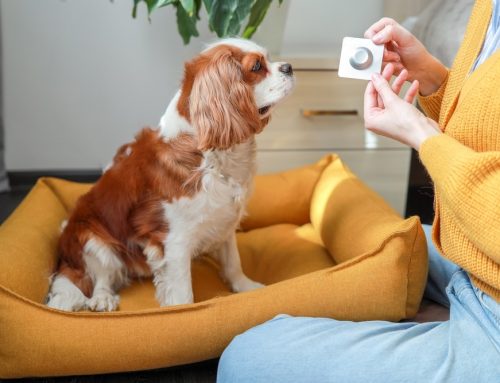
No. Pheromone diffusers, calming chews, and similar products can support behavioral work, but they do not replace it. Think of them as one tool in a broader plan rather than a fix on their own.
Starting Early for a Lifetime of Confidence
The investment made in the first months of a pet’s life pays dividends across every subsequent year. Veterinary visits become routine rather than traumatic. New experiences become interesting rather than threatening. The anxiety problems that require intensive intervention as adults are largely preventable with the right start, and the work is genuinely rewarding because you can watch your pet’s confidence grow week by week.
Request an appointment for your new pet’s wellness visit, or chat with our team to discuss a behavioral concern. Advanced care and exceptional love means we are invested in your pet’s wellbeing from their very first day with you.






Leave A Comment